Welcome to the Arctic Ocean!
The Arctic Ocean is the smallest and shallowest of Earth's five oceans. It surrounds the North Pole and is one of the coldest ocean environments on Earth.
Much of the Arctic Ocean is covered by sea ice, especially during the coldest parts of the year.
Even though the environment is extremely cold, the Arctic Ocean is home to many amazing animals. These animals have special adaptations that help them survive in freezing water, on sea ice, and along the ocean floor.
One of these animals is the walrus.
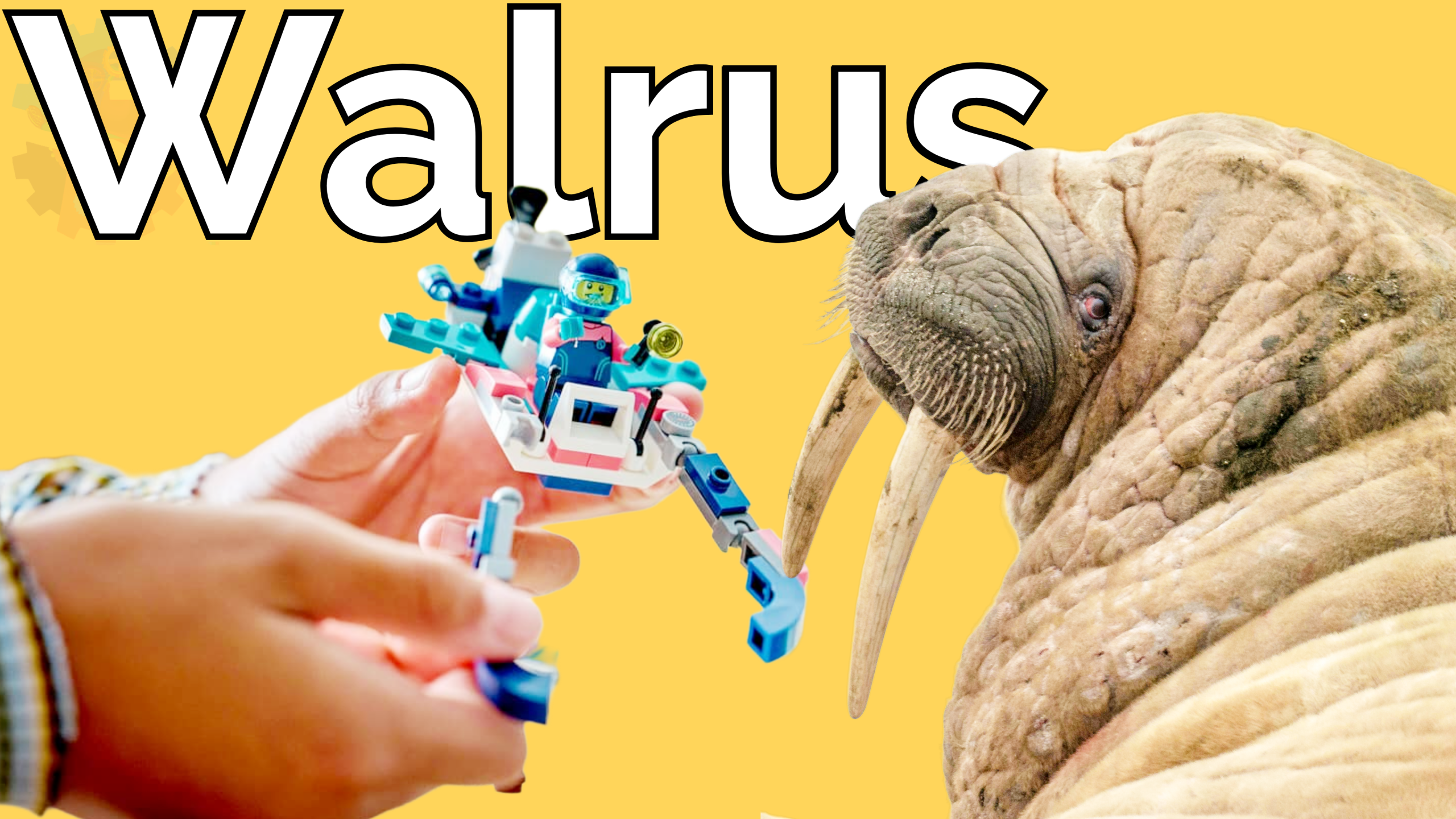
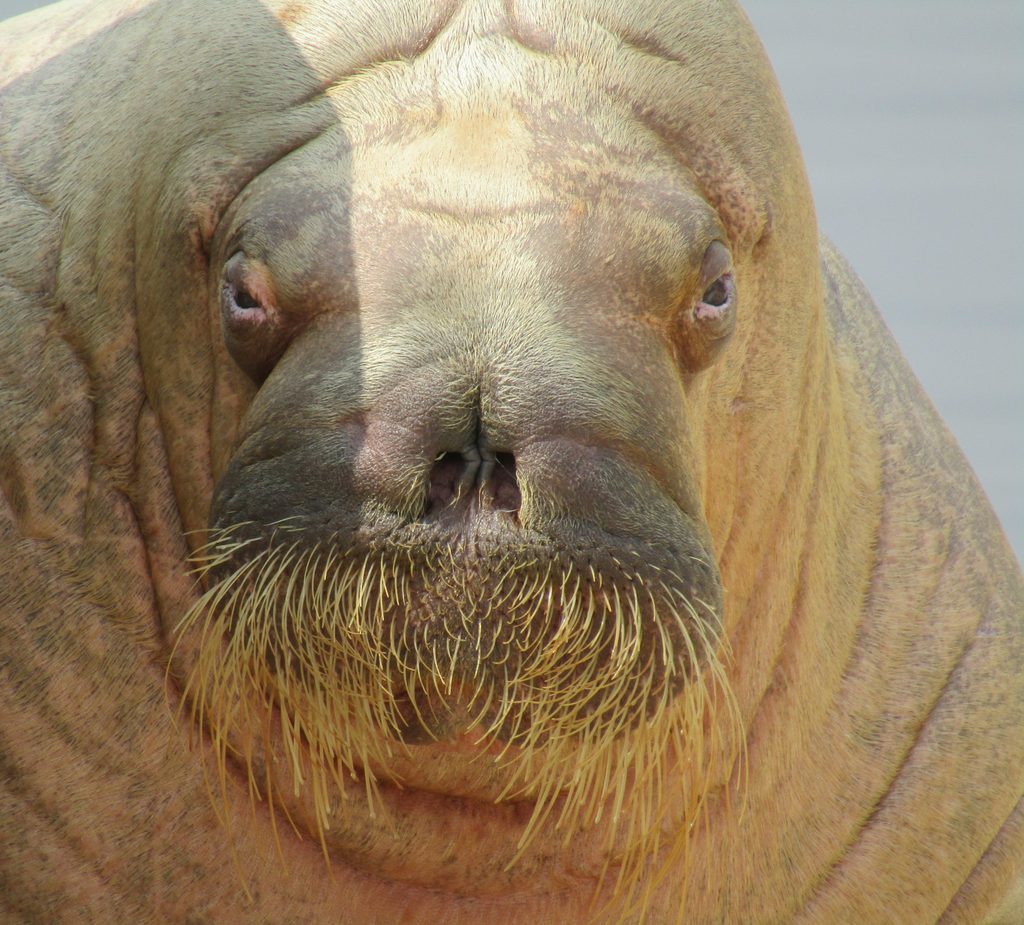
Walruses are large marine mammals that spend much of their lives in and around the Arctic Ocean. They use their sensitive whiskers to find food on the seafloor, and their thick layer of blubber helps keep them warm in the freezing water.
But surviving in the Arctic isn't just about finding food.
Walruses also need places to rest, stay together, and protect their young.
Today, you're going to become a marine biologist and engineer and help a researcher solve problems involving Arctic walruses.
Meet Dr. Corinne Vale
Dr. Corinne Vale is a LEGO Minifigure marine biologist and undersea explorer.
She studies walrus behavior and Arctic ecosystems.
Dr. Vale uses a research vehicle to explore beneath the Arctic ice. She watches walruses as they swim, search for food, and travel across the seafloor.
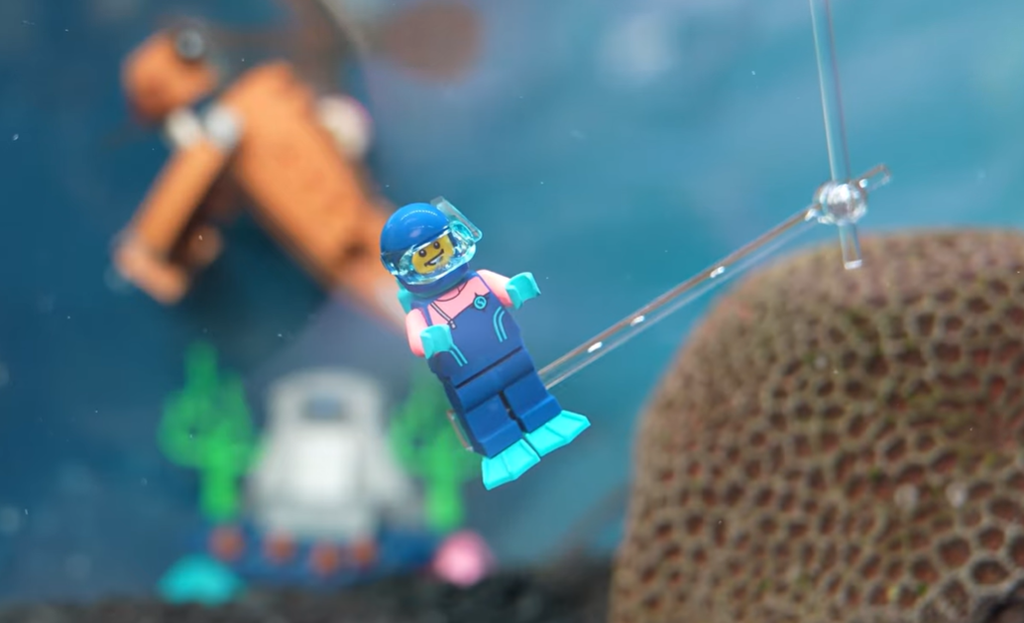
She wants to understand how walruses interact with their environment.
Today, Dr. Vale has two engineering problems for you to solve.
But first, you'll need to build the scientists and animals you'll be studying.
Build the Walruses
Before you begin your engineering challenges, you need to build your research team and the animals they are studying.
Your Mission
Use the building instructions in Bag 4 to build:
- Dr. Corinne Vale
- A mother walrus
- A baby walrus
As you build, think like a marine biologist.
Think about:
- What does a walrus need to survive?
- How does a walrus stay warm?
- How does a walrus find food?
- Why might a baby walrus need its mother?
- What does a walrus need from its environment?
Once your models are complete, you're ready for your first challenge.
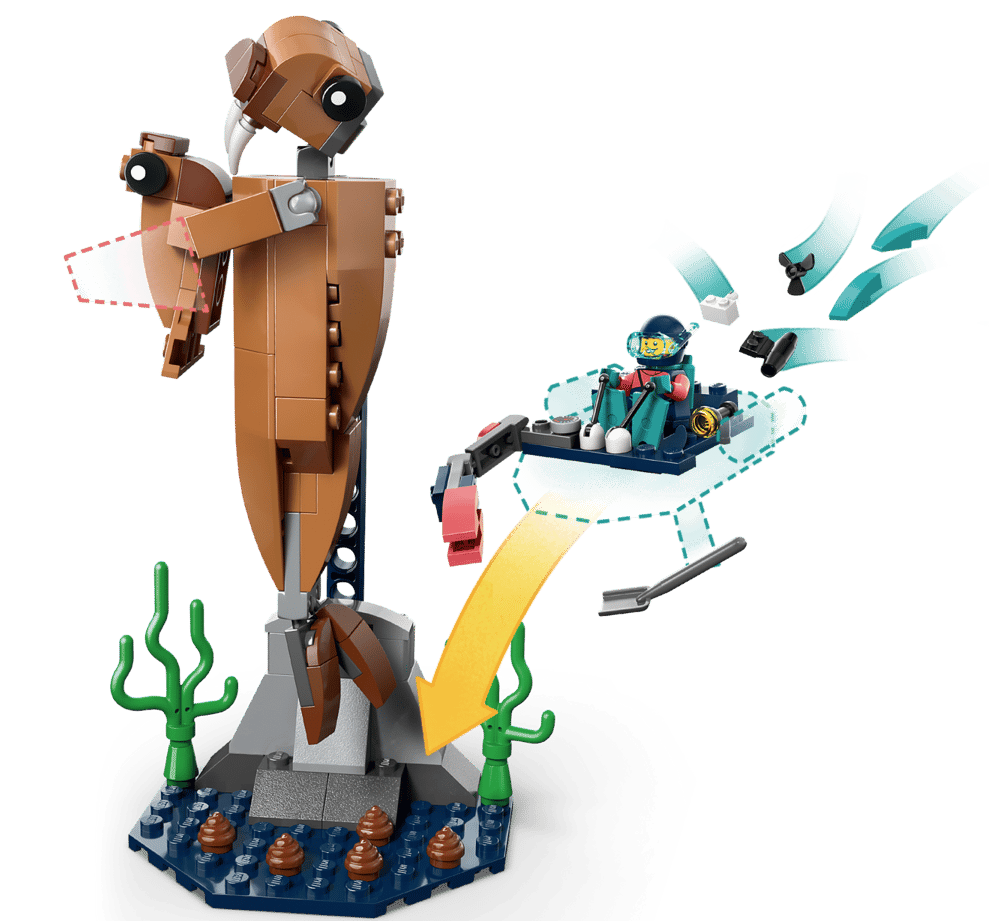
Help the Walrus Mom Protect Her Baby
Baby walruses aren't ready to survive on their own.
A mother walrus stays close to her baby and helps protect it from danger. Staying close can help the mother keep track of her baby and help the baby stay safe.
But our walrus mom has a problem...
She doesn't have any flippers to cuddle her baby!
That's where you come in.
Your Challenge
Design and build flippers for the mother walrus that allow her to hold her baby close.
Use your LEGO pieces to create a solution.
Your flippers should:
- Attach securely to the mother walrus.
- Allow the mother to hold her baby.
- Keep the baby close to its mother.
- Still allow the mother walrus to move.
There are many possible solutions.
It's up to you to decide what will work best!
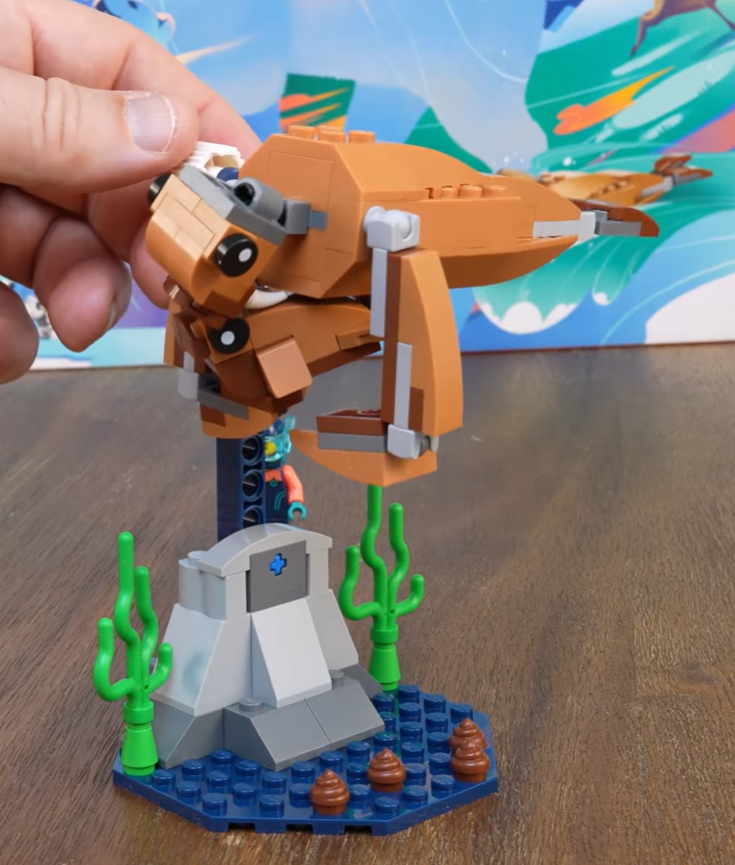
Test Your Design
Place the baby walrus next to its mother.
Try using your new flippers to hold the baby.
Did it work?
Move the mother walrus around.
Does the baby stay close?
If the baby falls away or your flippers don't work the way you expected, think like an engineer:
What could you change?
You might make the flippers longer.
You might change the shape of the flippers.
You might create a different way for the flippers to hold the baby.
Remember:
Engineers test their ideas, learn from what happens, and improve their designs.
Your engineering solution helps us think about a real biological problem.
A baby walrus depends on its mother for protection and care.
Think About It
Why might staying close to its mother help a baby walrus survive?
Think about predators, cold water, swimming, finding food, and staying with the group.
Build a Walrus Research Vehicle
Dr. Vale has been watching the walruses from her research vehicle.
She has learned where they swim, where they rest, and how they search for food.
But now she has another question:
What are the walruses eating?
Scientists can learn about an animal's diet by studying its feces, or poop.
A poop sample can contain clues about what an animal has eaten. Scientists can use these clues to learn more about an animal's diet and the environment where it lives.
But Dr. Vale has a problem.
The walruses are searching for food on the seafloor.
How can Dr. Vale collect a sample without disturbing the walruses?
That's where you come in.
Your Challenge
Use the pieces in Bag 6 to invent an underwater research vehicle for Dr. Vale.
Your vehicle should:
- Travel underwater.
- Reach the seafloor.
- Collect a walrus poop sample.
- Bring the sample back to Dr. Vale.
There are many ways to solve this problem.
What will your vehicle look like?
Before you build, examine your pieces and think about what each part could do.
Think Like an Engineer
Consider:
- How will your vehicle move underwater?
- How will it reach the seafloor?
- How will it collect the sample?
- How will it bring the sample back?
Your job is to invent your own solution.
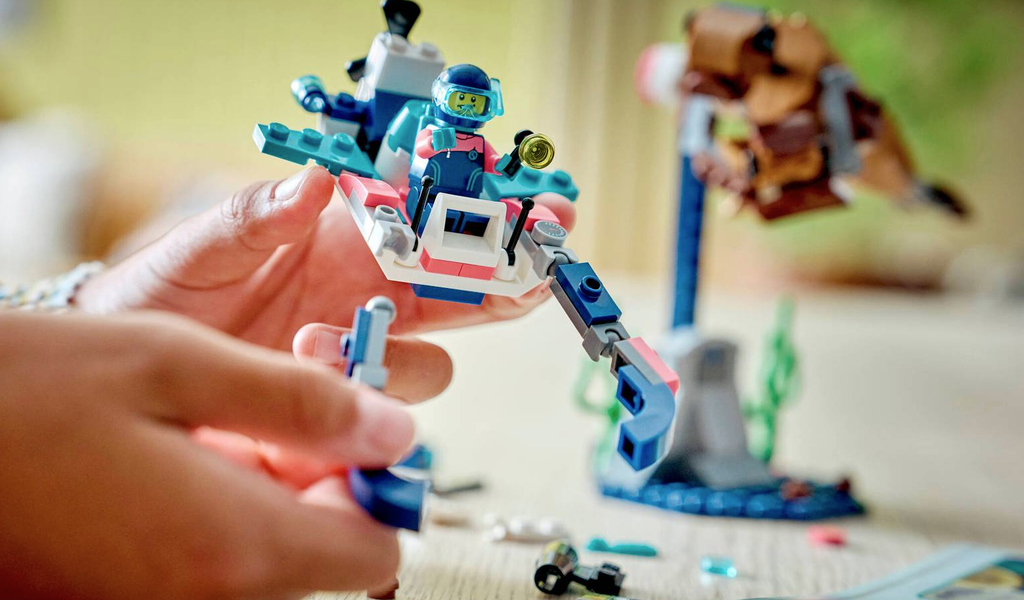
Dr. Vale wants to study the sample because it could contain clues about the walrus and its environment.
Think About It
What could Dr. Vale learn by studying a walrus poop sample?
Could it tell her what the walrus has been eating?
Could it provide clues about where the walrus has been feeding?
Could it help scientists learn more about the Arctic ecosystem?
LEGO Marine Biologist
Dr. Corinne Vale is fictional, but scientists really do study walruses in the Arctic.
Scientists observe walruses to learn about their behavior, feeding habits, movements, and relationships with sea ice.
Walruses are especially interesting because they are closely connected to the Arctic marine environment.
They use the ocean to find food, while sea ice can provide an important place for them to rest.
Scientists can study walruses to better understand how changes in the Arctic environment may affect the animals that depend on it.
Think About It
If the Arctic environment changes, what parts of a walrus's life might be affected?
Think about food, sea ice, resting places, and where walruses travel.
Assess what you learned
Use what you learned from this lesson to answer the questions below.
1. What is the Arctic Ocean?
Describe where the Arctic Ocean is located and explain what makes its environment different from many other oceans.
2. What adaptations help walruses survive?
Describe at least two adaptations that help walruses live in the Arctic.
Think about their blubber, whiskers, tusks, bodies, or behavior.
3. Why might a baby walrus stay close to its mother?
Explain how staying close to its mother could help a baby walrus survive.
4. How did your flipper design help the walrus mom?
Describe one feature of your design that helped the mother hold her baby.
5. What did you change after testing your flippers?
Explain what happened during your testing and how you improved your design.
6. How did your research vehicle solve a problem?
Explain how your vehicle was designed to reach the seafloor and collect a sample.
7. What could scientists learn from a walrus poop sample?
Explain what information a sample might provide about a walrus or its environment.
8. How are science and engineering connected?
Scientists ask questions and gather evidence. Engineers design solutions to problems.
How did you use both science and engineering during this lesson?
9. Engineering Challenge
What is one thing you learned from testing your designs that you could use to solve a completely different problem?
Great Work, Marine Biologist!
You explored the Arctic Ocean, learned about walrus adaptations, built a mother and baby walrus, designed flippers to help protect a baby, and invented an underwater research vehicle.
You also practiced an important part of both science and engineering:
Ask questions. Build. Test. Learn. Improve.
The Arctic Ocean is full of mysteries, and scientists are still learning about the animals that call it home.
What will you discover next?
Check out our Video Version of this Lesson!