1. Introduction & Build
Welcome to the Arctic Tundra!
The Arctic tundra is a challenging place to live. Temperatures can become extremely cold, snow can cover the ground, and finding food can become difficult.
Yet reindeer survive here year after year. How do they do it?
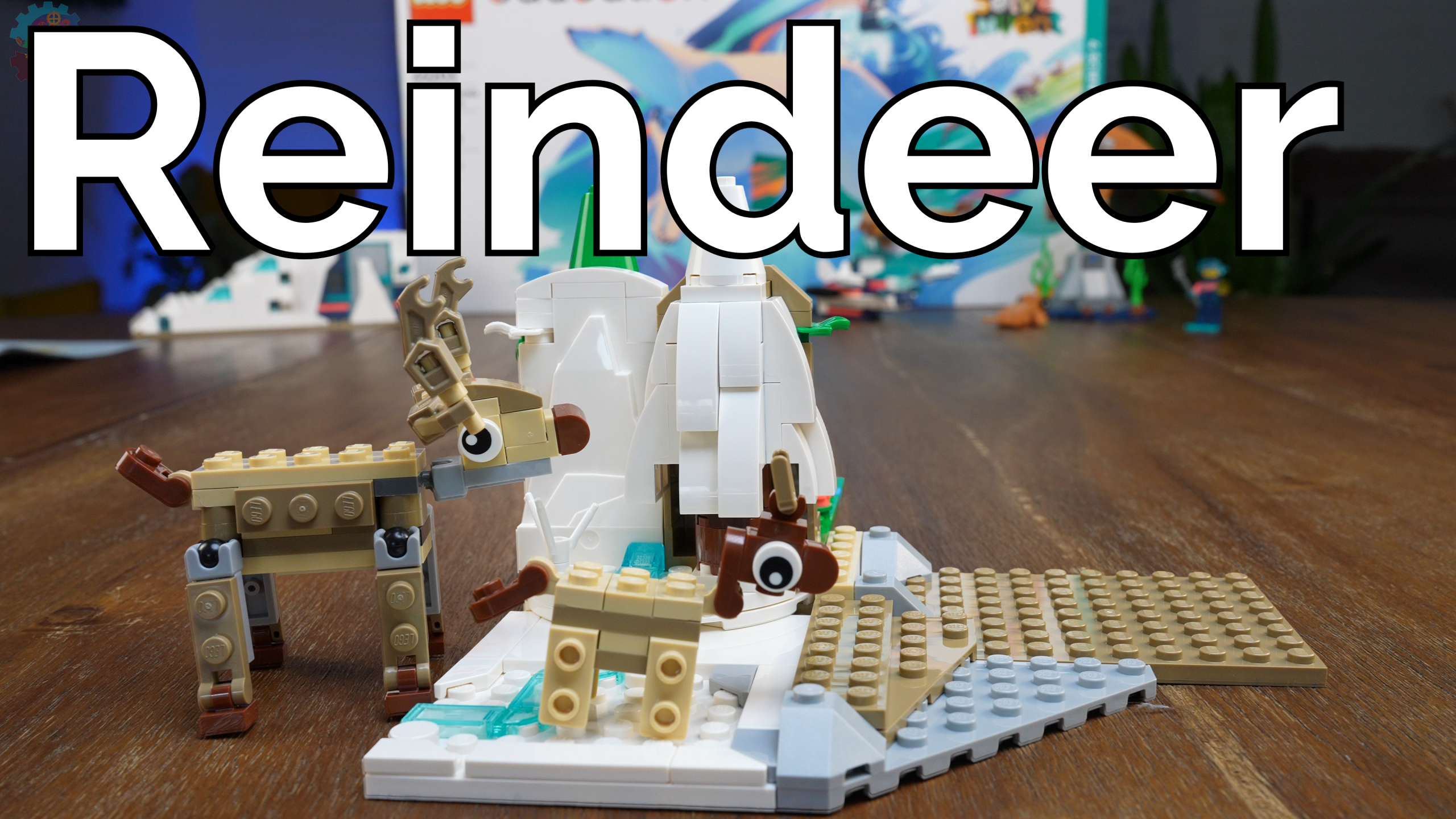
Reindeer have special adaptations that help them survive in their environment. Their bodies are covered with fur that helps insulate them from the cold. They also have large hooves that help them move across snow and soft tundra. They even can be used as shovels to dig through snow to find food.
Today, you're going to become a wildlife biologist and engineer and help Dr. Sienna Voss study reindeer.
Build Your Arctic Environment
Use LEGO Bags 7 and 8 to build:
- A baby reindeer
- An adult reindeer
- The Arctic tundra environment
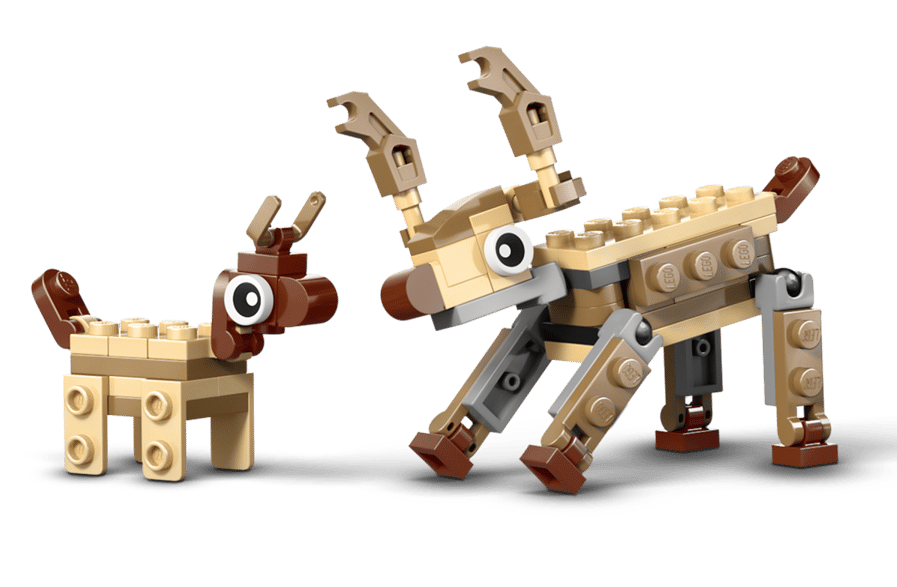
As you build, think like a wildlife biologist:
What does a reindeer need to survive?
What might change when winter arrives?
How could a reindeer's body help it survive?
What might make finding food difficult in winter?
When your models are complete, look closely at your environment. Switch between the summer and winter settings.
Where do you think the reindeer find food during the summer?
What changes when winter arrives?
2. Challenge: Winter Has Arrived!
The temperature is dropping.
Snow is beginning to cover the tundra.
Winter has arrived in the Arctic!
Reindeer need to be ready for the cold.
During winter, reindeer naturally grow a thicker, denser coat of fur. This extra fur helps insulate their bodies by trapping warm air close to their skin.
Your Challenge
Use LEGO Bag 9 to create winter adaptations for your two reindeer.
Your goal is to design additional fur and features that help your reindeer survive the cold Arctic winter.
Think Like an Engineer
As you build, ask yourself:
- How can I make the reindeer's fur thicker?
- How can I cover parts of the reindeer's body?
- How can I help my reindeer stay warm?
- How might these changes help the reindeer survive?
There are many ways to successfully build.
Scientists and engineers often come up with many different ways to solve a problem.
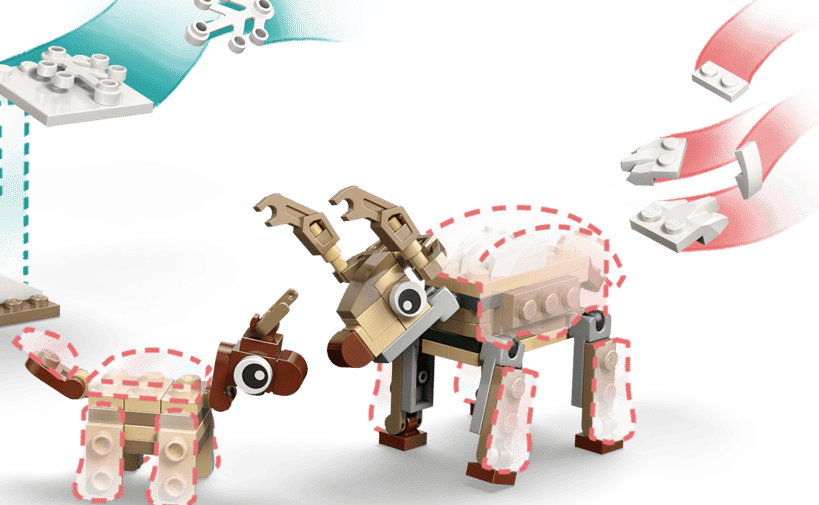
Test Your Adaptation
Place your reindeer in the summer environment.
Then switch the environment to winter.
What do you notice?
Do your reindeer look different against the winter environment?
Think About It
Reindeer are also called caribou in North America.
Why might having a thick winter coat be an important adaptation for an animal living in the Arctic?
3. Challenge: Hide the Scientist!
Dr. Voss has a problem.
She wants to photograph the reindeer behaving naturally, but the animals are noticing people nearby.
If a reindeer becomes frightened, it might:
- Run away
- Stop eating
- Avoid the area
- Behave differently than it normally would
If the animals change their behavior because a scientist is nearby, Dr. Voss might not collect accurate information.
Your Challenge
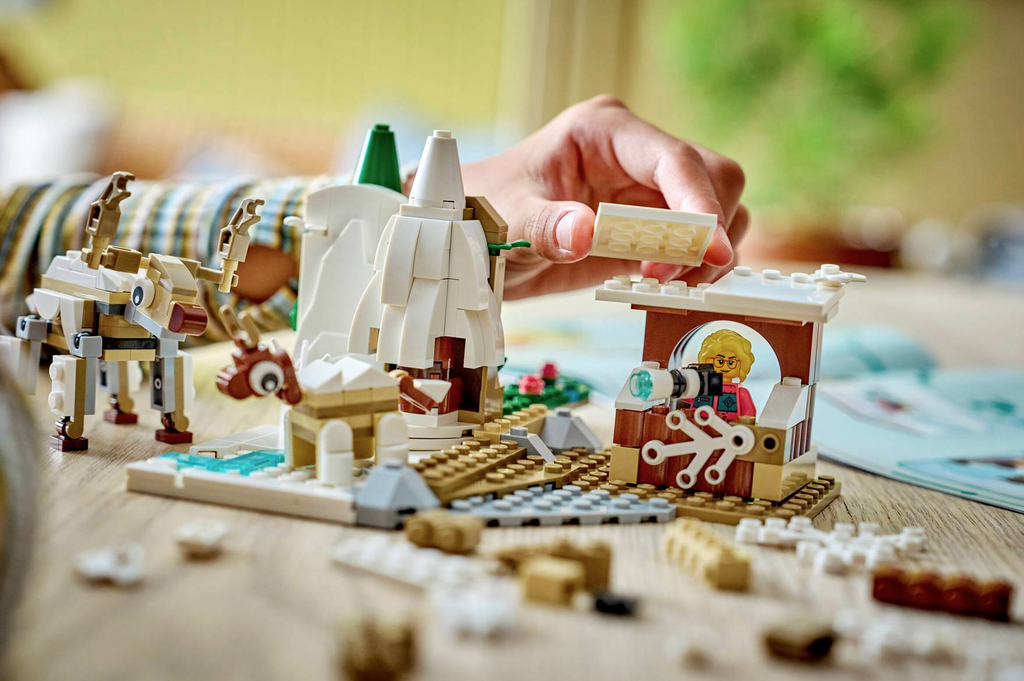
Design and build a hiding place where Dr. Voss can observe and photograph the reindeer without being noticed.
Scientists call this type of hiding place an observation blind.
Your blind should:
👀 Allow Dr. Voss to see the reindeer
📸 Give her room to use her camera
🌿 Help her blend into the environment
🦌 Keep the reindeer from noticing her
Think Like a Biologist AND an Engineer
Before you build, think about:
Where should Dr. Voss hide?
What could you use to make the blind blend into the environment?
How can Dr. Voss see the reindeer without being seen?
How will your design keep the animals from becoming frightened?
Test Your Design
Place Dr. Voss inside your observation blind.
Can she see the reindeer?
Can she take a photograph?
Can the reindeer see her?
If the reindeer notices Dr. Voss, redesign your blind and try again!
Final Question
You've helped Dr. Voss study how reindeer survive as their environment changes.
Now think about other Arctic animals.
What adaptations help other animals survive in the Arctic?
A walrus has thick blubber that helps insulate its body in cold water.
An Arctic fox has a thick coat that helps keep it warm.
A snowshoe hare can change the color of its fur during the year, helping it blend into its surroundings.
Big Science Question
How does an animal's environment influence the traits and behaviors that help it survive?