1. Introduction and Build
Meet an Apex Predator
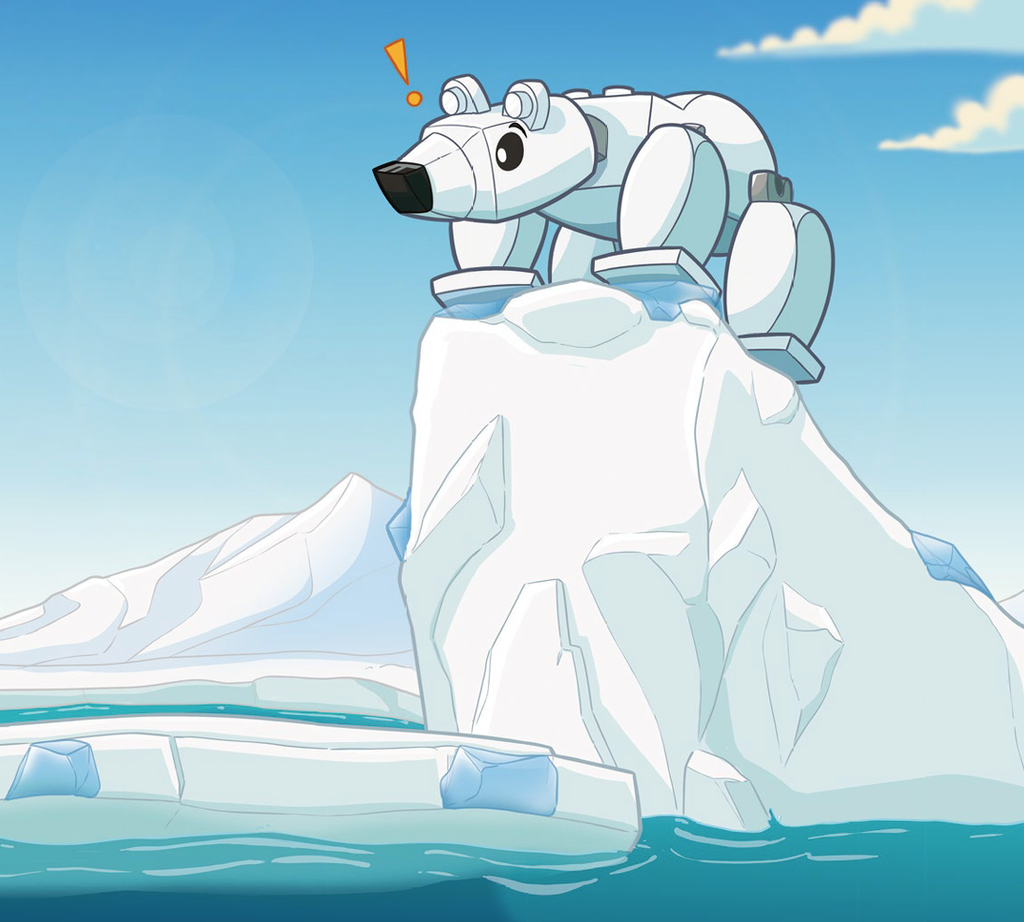
Polar bears are the largest land predators on Earth. They live in the Arctic and the Northern Hemisphere, where they spend much of their time on sea ice and in the surrounding coastal areas.
Polar bears are apex predators, which means they are at the top of their food web. Adult polar bears primarily hunt seals, especially ringed and bearded seals. They may also eat other marine mammals, birds, eggs, fish, and other available food when opportunities arise.
Living in the Arctic presents some major challenges. Polar bears must travel across snow and sea ice to find food, resting places, and mates. They also need to survive extremely cold temperatures.
A polar bear's body has several traits that help it survive.
Their thick layer of body fat, or blubber, provides insulation and stores energy. Their dense fur helps keep heat close to their bodies. Polar bears also have large paws with rough surfaces, fur, and strong claws that help them grip snow and ice.
These traits are examples of adaptations. An adaptation is a trait or behavior that helps an organism survive in its environment.
Today, you will investigate one of these adaptations and use engineering to improve it.
Build
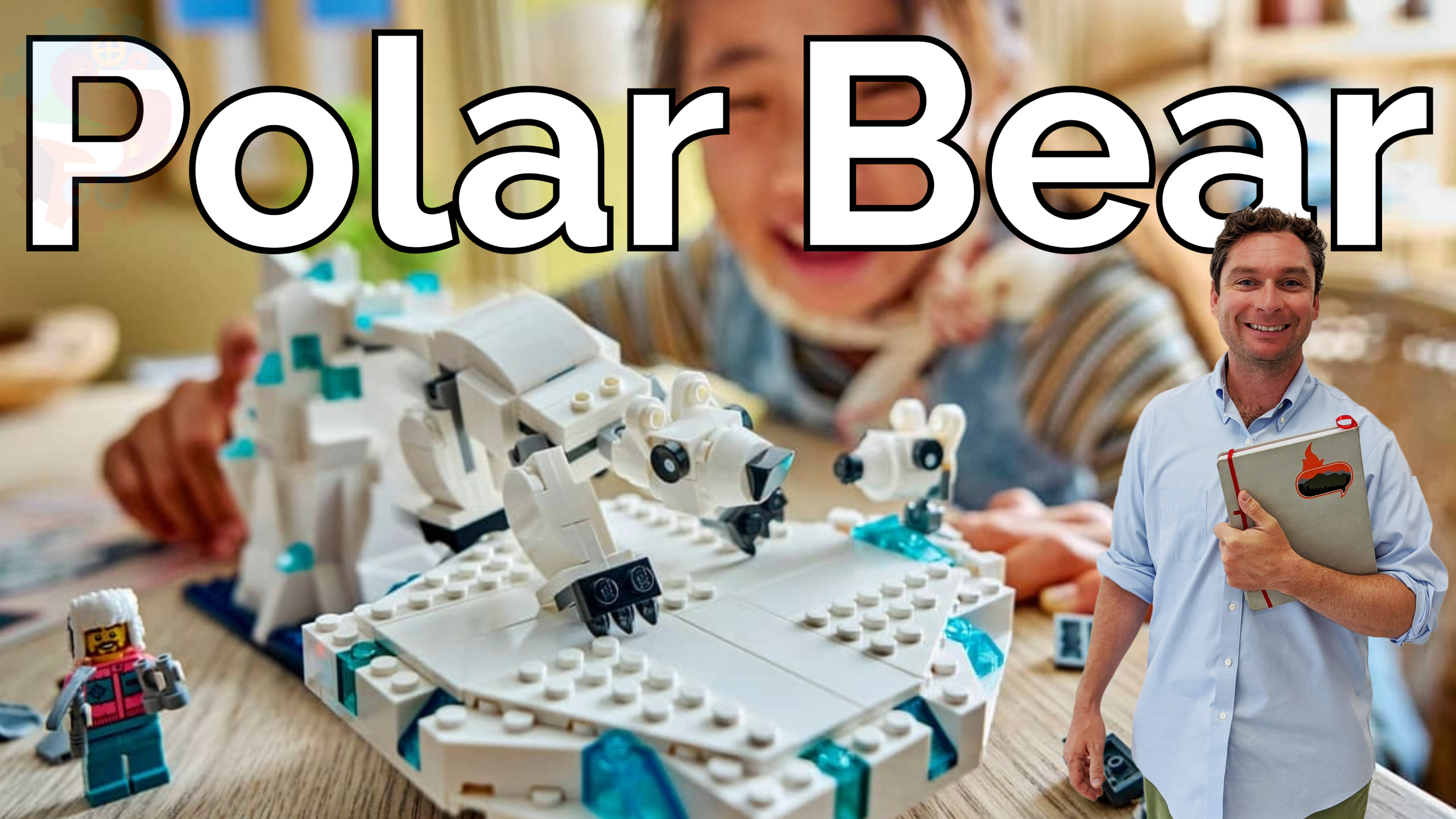
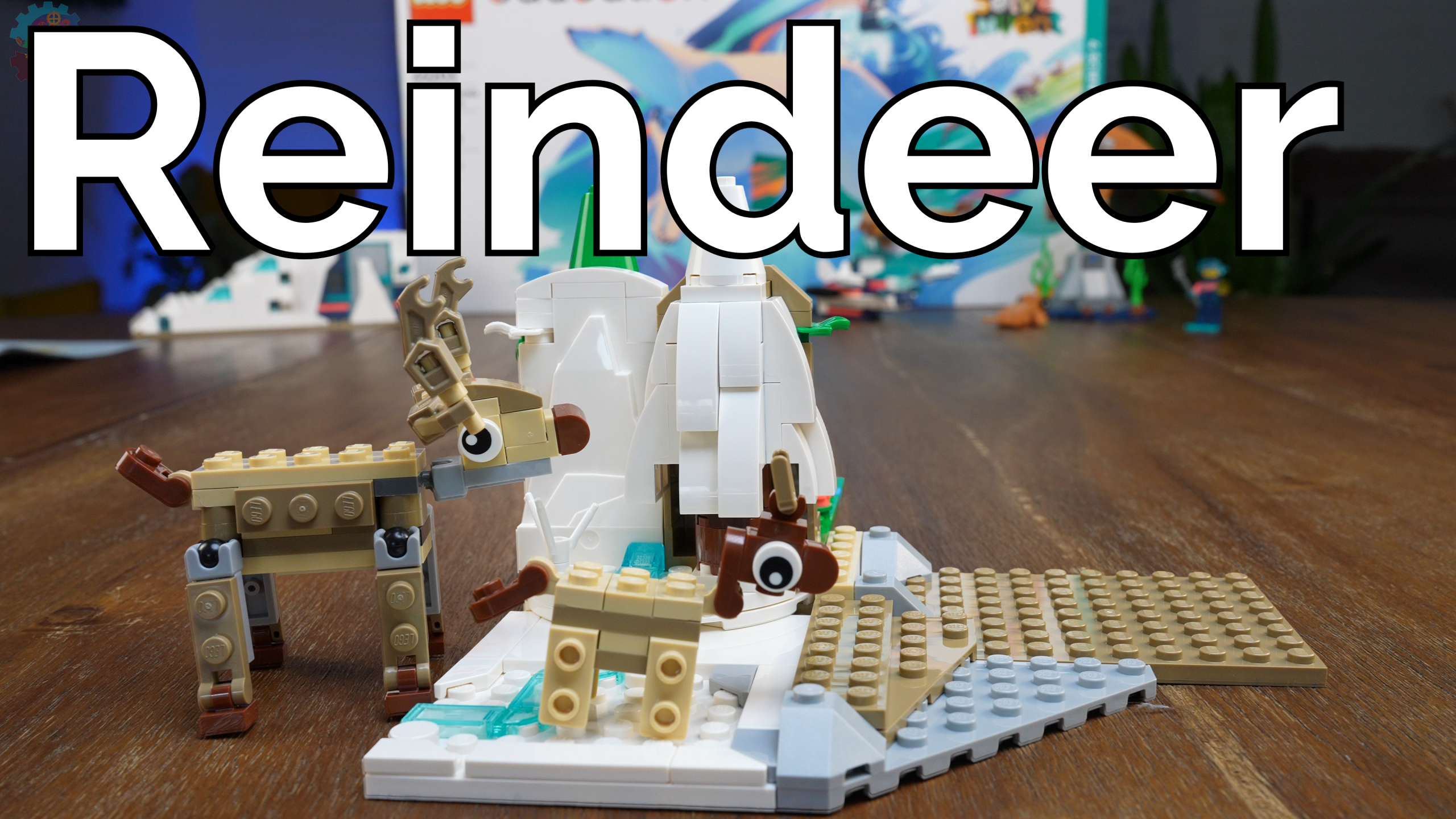
Use Bags 11, 12, 13 to build:
- A polar bear mother
- A polar bear cub
- The sea ice environment
As you build, think about:
- What challenges does a polar bear face in the Arctic?
- How could a polar bear's body help it survive?
- Why might gripping the ice be important?
2. Solve: Help the Polar Bear Reach the Ice
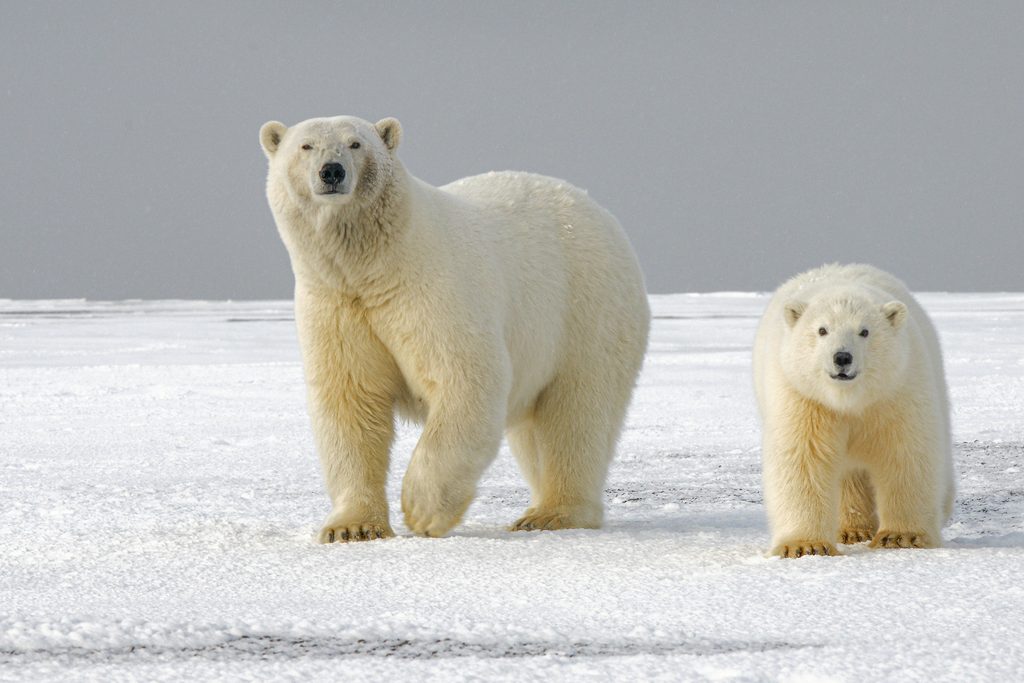
The mother polar bear needs to join her cub on an ice floe.
Polar bears are excellent swimmers and can travel through cold Arctic water. Their thick layer of blubber helps insulate their bodies, while their fur and skin also help reduce heat loss.
But swimming to an ice floe is only part of the challenge.
How can the mother polar bear climb onto the ice without slipping?
Polar bears have large paws with claws and rough surfaces that help them grip the ice.
Now it is your turn to think like an engineer.
Your Challenge
Design new feet for the polar bear that help her land on and grip the ice without sliding off.
Use the pieces in Bag 14.
Your design should:
- Help the polar bear grip the ice.
- Keep the polar bear from sliding backward.
- Stay attached to the polar bear.
- Allow the polar bear to reach her cub.
Test Your Design
Test your polar bear on the ice.
Does she stay in place?
Does she slide?
Does she reach her cub?
If your design doesn't work, change it and test it again.
Think about the features of a real polar bear's paws. What could you add to your design to increase friction or improve its grip?
Engineers use testing to learn what works and what needs to change.
3. Invent: Build a Vehicle for a Polar Researcher
Meet a Real Polar Researcher
Scientists travel to some of the most challenging environments on Earth to study Arctic animals.
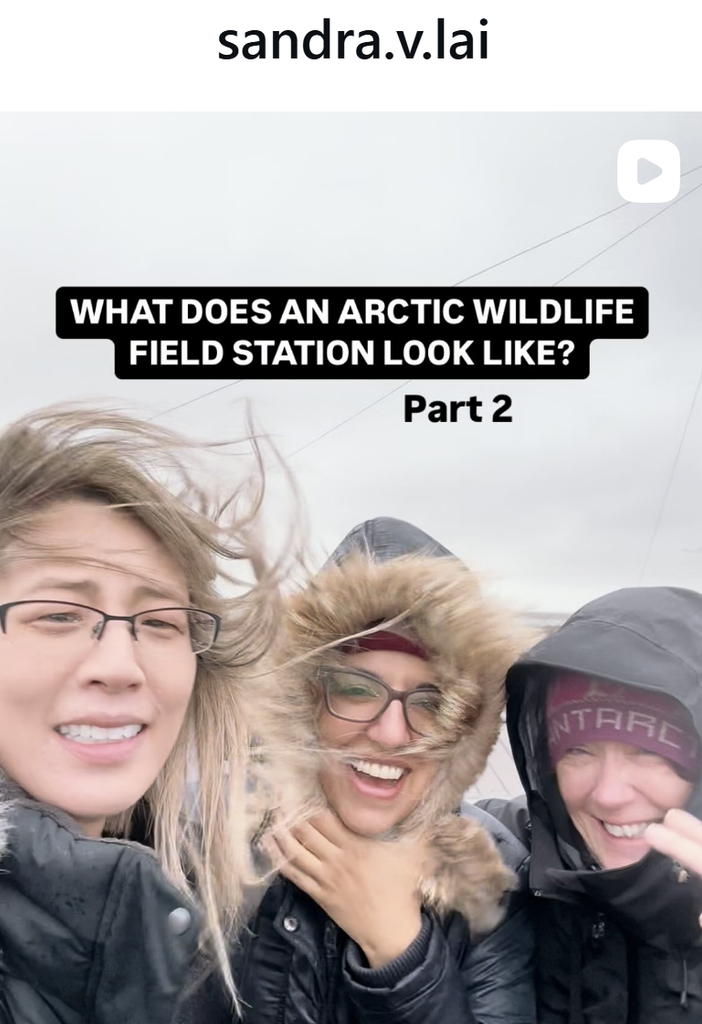
Dr. Sandra Lai is an ecologist and carnivore researcher who studies how animals move and behave in extreme environments.
Her research has included studying Arctic foxes on Bylot Island in Nunavut and Arctic hares on Ellesmere Island in Canada's High Arctic.
Dr. Lai's research has helped scientists understand how Arctic animals move across large and challenging landscapes. Her work with Arctic foxes examined their winter movements, territories, and use of sea ice. Her research on Arctic hares has documented surprisingly long-distance movements across the polar desert.
Studying animals in the High Arctic can be difficult. Researchers may spend weeks or months working in remote areas, often camping in extremely cold conditions while tracking animals and collecting scientific data.
Scientists like Dr. Lai need equipment and transportation that can help them safely work in these environments.
Now she has a problem for you to solve.
Design a Polar Research Vehicle
Dr. Lai needs to move from a snowy slope onto a nearby ice floe.
Your Challenge
Design and build a vehicle that allows Dr. Lai to travel from the slope and land securely on the ice.
Use the pieces in Bag 14.
Look carefully at the polar bear's feet.
Can you use the same ideas that help a polar bear grip the ice to improve your vehicle?
Your vehicle should:
- Travel down or across the slope.
- Reach the ice floe.
- Land securely.
- Stay on the ice without sliding away.
Design, Test, Improve
Before you build, think about the problem.
How will it land?
What will help it grip the ice?
How can you keep it from sliding after it lands?
Test your vehicle several times.
If it slides off the ice or doesn't land safely, change your design and try again.
Your goal is to use what you learned about polar bear adaptations to create an engineering solution.
Think Like a Scientist
The polar bear's feet and your research vehicle may look very different, but they are solving a similar problem:
How can something move across ice without losing its grip?
The polar bear has traits that evolved over many generations. Engineers can observe those traits and use the ideas behind them to inspire new designs.
This is an example of how science can inform engineering.
Essential Questions
1. How did you change the polar bear's feet so they could grip the ice better?
Describe the feature you added or changed and explain why it helped.
2. Was your research vehicle similar to or different from the polar bear's feet?
Explain how your design used ideas from the polar bear's adaptations.
3. What other features help polar bears survive in the Arctic?
Think about their fur, blubber, paws, claws, body shape, swimming ability, or behavior.
4. Why is gripping the ice important for a polar bear?
Explain how the ability to move safely across ice could help a polar bear find food, travel, or care for its young.
5. How did testing change your design?
Describe something that didn't work the first time and explain how you improved it.
What Did You Learn?
In this lesson, you explored how animal structures help organisms survive in their environments.
You learned that polar bears have adaptations such as:
- Thick blubber for insulation and energy storage
- Dense fur that helps reduce heat loss
- Large paws that distribute their weight
- Rough paw surfaces and claws that help them grip ice
- A body adapted for swimming and moving across Arctic environments
You then used what you learned about polar bear adaptations to solve an engineering problem.
This connects science and engineering:
Scientists investigate how organisms survive. Engineers use scientific ideas to design and improve solutions to problems.