Build a working LEGO traffic signal inspired by Garrett Morgan, the inventor whose improved traffic light design helped make roads safer. In this challenge, students design a motorized signal system, learn why timing and clear communication matter, and connect history to real engineering decisions.
Who Was Garrett Morgan?
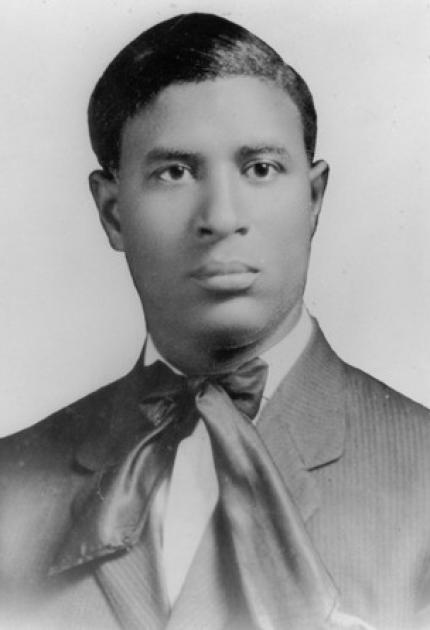
Garrett Morgan was an inventor and entrepreneur who saw a dangerous problem on early 1900s streets—cars, horses, and pedestrians all competing for space. After witnessing a serious accident, he designed an improved traffic signal that warned drivers before it was time to stop. His ideas laid the foundation for modern traffic lights and saved countless lives.
Big idea: Engineering starts with noticing a problem and designing a safer solution.
Real Invention: Key Features
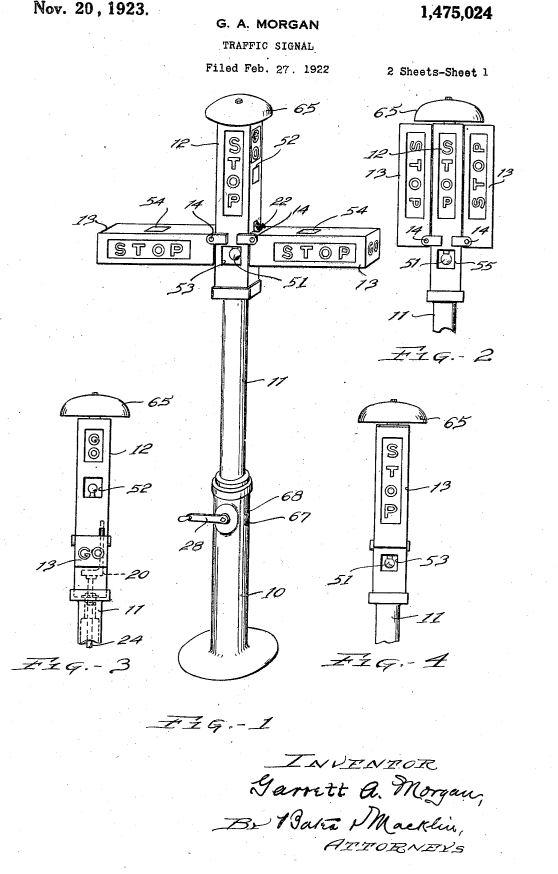
Morgan’s traffic signal needed to:
- Clearly tell people when to stop and go
- Include a warning phase before stopping
- Be simple and reliable so drivers could understand it quickly
- Improve safety at busy intersections
LEGO Robot Challenge
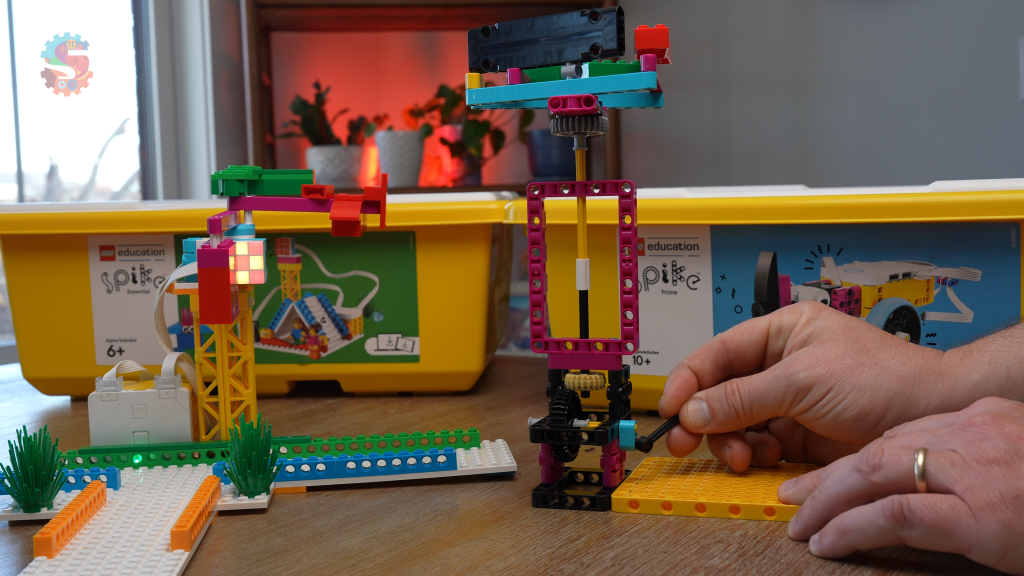
Your mission: Build a LEGO traffic signal that controls movement using timing and visual signals.
Build Requirements
- One motor to rotate or switch the signal
- Visual indicators (colors, panels, or arms)
- A programmed timing sequence (stop → warning → go)
Optional Add‑Ons
- Add a button to change modes
- Add a sound for the warning phase
- Create two directions of traffic
Suggested Materials
- 1 Motor
- LEGO beams, connectors, and plates
- Light elements or colored bricks
- Hub (Spike Prime or Essential)
Programming Concepts
- Timers / wait blocks
- Motor control
- Sequence order
- Loops
Extension: Add conditionals to handle pedestrian crossings.
Discussion Questions
- Why was a warning signal important?
- What could go wrong if the timing is too fast or too slow?
- How does this robot help keep people safe?
- What improvements would you make today?
Learning Objectives
Students will:
- Understand how inventions solve real-world problems
- Practice sequencing and timing in code
- Explore how safety influences engineering design
- Connect history to modern technology
Extensions & Challenges
- Design a pedestrian crossing button
- Add a second intersection
- Compare old traffic signals to modern smart traffic systems
- Track how many cars safely pass through
Video Connection
🎥 Watch the full build video: https://youtu.be/o2VpeirX9PY
Read More About Garrett Morgan
After spending four years in Cincinnati, in 1895 Morgan moved to Cleveland, where he took a job sweeping floors at the Roots and McBride Co. Over time, he grew familiar with the company’s sewing machines, teaching himself how to operate and repair them. Not only did Morgan become a skilled machinist, but he also found inspiration for his first invention — a belt fastener for sewing machines.
In 1907, Morgan started his own business where he repaired and sold sewing machines. Two years later he opened a tailor shop: The Morgan Skirt Factory. While his wife Mary sewed clothes, Morgan built and maintained the sewing machines. He also began experimenting with a liquid for polishing sewing machine needles, preventing them from burning fabric as they sewed. When he discovered the liquid also could straighten hair, he used it to develop a hair cream, and he soon established the G. A. Morgan Hair Refining Co. Morgan then began investing his profits into developing more inventions.
Morgan found the motivation to develop one of his most impactful inventions when he learned about the devastating Triangle Shirtwaist Co. fire that caused the deaths of 146 garment workers in New York City in 1911. Understanding that the firefighters had struggled with smoke inhalation, Morgan began to devise a solution. In 1912, he filed for a patent on his breathing device, a “safety hood” that was designed to give a first responder the ability to “supply himself at will with fresh air from near the floor [and] at the same time forcibly remove smoke or injurious gases from the air tube.” Two years later, he established the National Safety Device Co.
In 1916, the importance of Morgan’s safety hood invention was demonstrated at the site of a tragic accident in Cleveland. Following an explosion at the Cleveland Waterworks that killed 18 workers, survivors were trapped as a gas-filled tunnel collapsed under Lake Erie. Without effective safety equipment, rescuers had been unable to reach them because smoke, dust and fumes blocked their way. But when some volunteers — including Morgan himself — put on safety hoods, they were able to successfully reach and rescue several survivors.
Despite his invention’s obvious lifesaving potential, Morgan found difficulty in selling his safety hood to white fire chiefs who refused to buy products from a Black inventor. In response, Morgan sought the advice of the famous entrepreneur J.P. Morgan, who suggested he remove his first name from the product. Following this advice, the inventor began calling his device the “Morgan Safety Hood.” He also hired white actors to promote the product at conventions, helping him to avoid racist objections. Morgan’s new marketing strategies worked, and fire departments across the country finally began to buy his early gas masks.
By the 1920s, Morgan had established himself as a successful businessman and had purchased an automobile. While driving through Cleveland one day, he witnessed a collision between a horse-drawn carriage and another vehicle at an intersection. This experience compelled Morgan to once again use his talents and skills to develop an invention that would improve the safety and welfare of his fellow citizens.